


The Universe
From the planets to the stars and out to the edge of the unknown, history and science collide in a wondrous yet deadly adventure through space and time.
Concluded on 1980-12-21 with S1E13 (Who Speaks for Earth?). All episodes available for tracking.
Carl Sagan covers a wide range of scientific subjects, including the origin of life and a perspective of our place in the universe.
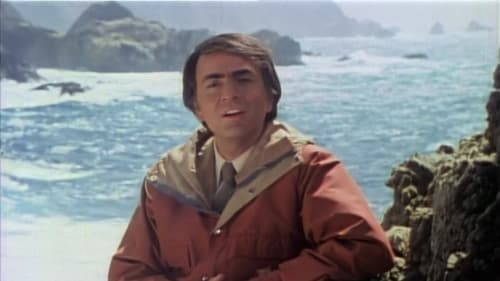
At the beginning of this cosmic journey across space and time, Dr. Carl Sagan takes us to the edge of the universe aboard a spaceship of the imagination. Through beautiful special effects, we witness quasars, exploding galaxies, star clusters, supernovas and pulsars. Returning to our solar system, we enter a re-creation of the Alexandrian Library, the seat of learning on Earth 2,000 years ago.

Dr. Sagan's cosmic calendar makes the history of the universe understandable and frames the origin of the Earth and the evolution of life. We see the evolutionary process unfold, from microbes to humans. Our understanding of how life developed on Earth enables us to venture to other worlds for imaginative speculations on what forms life might take elsewhere.

This episode is a historical re-creation of the life of Johannes Kepler, the last scientific astrologer, the first modern astronomer and the author of the first science fiction novel. Kepler provided the insight into how the moon and the planets move in their orbits and ultimately how to journey to them. It's also a story about the scientific process of discovery, and how the search for truth is never easy but always worthwhile.
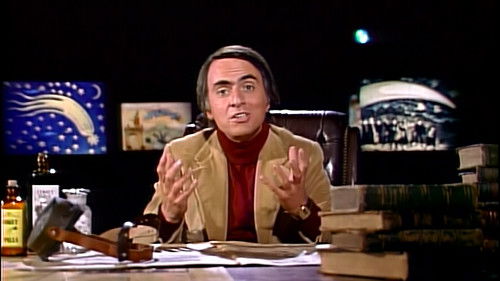
A descent through the hellish atmosphere of Venus to explore its broiling surface serves as a warning to our world about the possible consequences of the increasing greenhouse effect. Then Dr. Sagan leads us on a tour of our solar system to see how other heavenly bodies have suffered from various cosmic catastrophes.

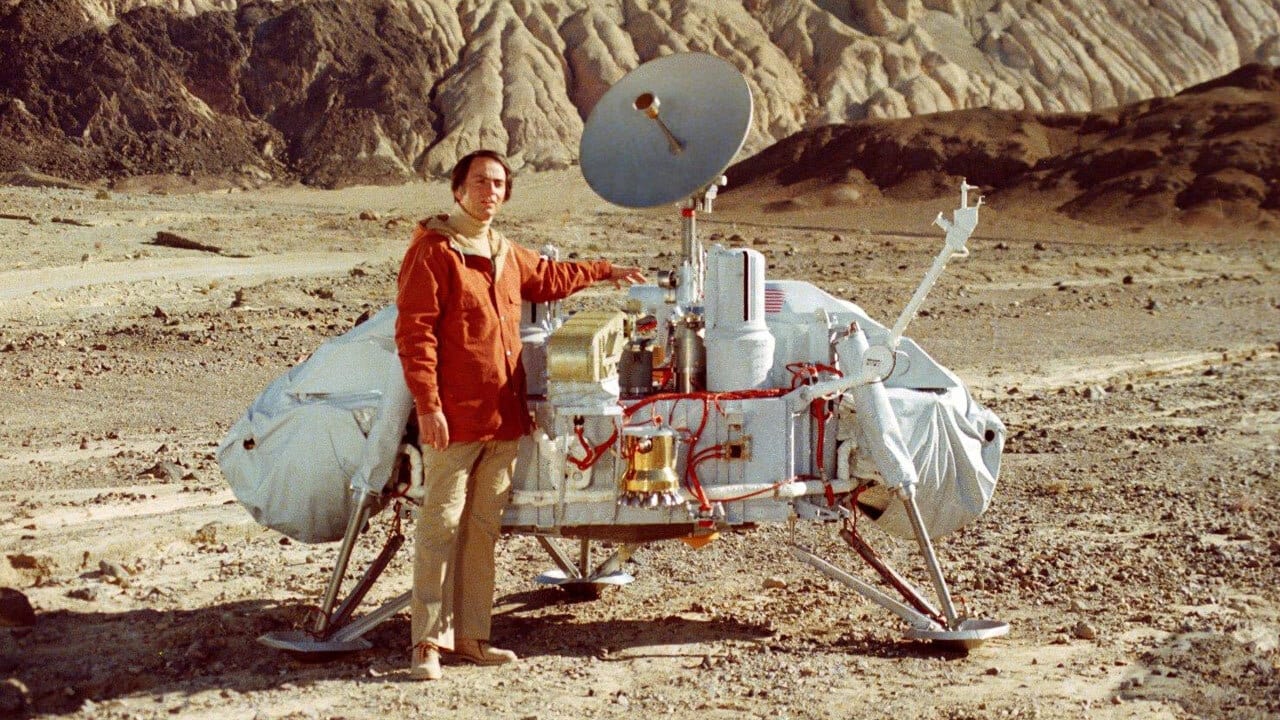
Is there life on Mars? Dr. Sagan takes viewers on a tour of the red planet first through the eyes of science fiction authors, and then through the unblinking eyes of two Viking spacecrafts that have sent thousands of pictures of the stunning Martian landscape back to Earth since 1976. Though based on older Mars missions, Sagan's analysis still holds true.
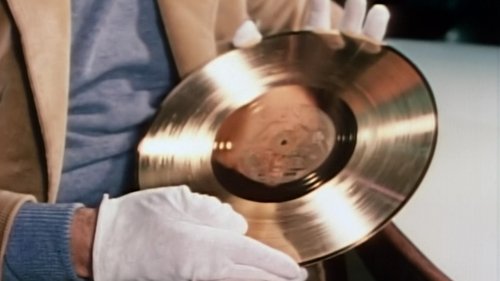
Dr. Sagan compares the exhilaration of 17th-century Dutch explorers who ventured in sailing ships halfway around our planet in their quest for wealth and knowledge to an inside view of the excitement around Voyager's expeditions to Jupiter and Saturn. The newly acquired treasures of our present golden age of exploration are the focus of this episode.

Humans once thought the stars were campfires in the sky and the Milky Way "the backbone of night." In this fascinating segment Dr. Sagan takes us back to ancient Greece, when the basic question "what are the stars?" was first asked. He visits the Brooklyn elementary school of his childhood, where this same question is still on students' minds.
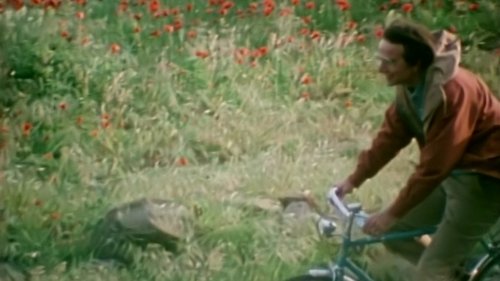
A voyage to see how star patterns change over millions of years is followed by a journey to the planets of other stars, and a look at the possibility of time travel. This takes us to Italy, where a young Albert Einstein first wondered what it would be like to ride on a beam of light.

Using computer animation and amazing astronomical art, Dr. Sagan shows how stars are born, live, die and sometimes collapse to form neutron stars or black holes. We then journey into the future to witness "the last perfect day on Earth," 5 billion years from now, after which the sun will engulf our planet in the fires of its death throes.
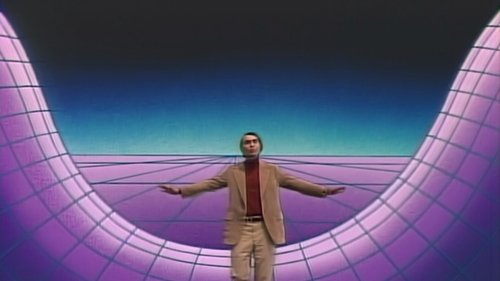
Dr. Sagan leads us on some awesome trips — to a time when galaxies were beginning to form, to India to explore the infinite cycles of Hindu cosmology, and to show how humans of this century discovered the expanding universe and its origin in the big bang. He disappears down a black hole and reappears in New Mexico to show us an array of 17 telescopes probing the farthest reaches of space.
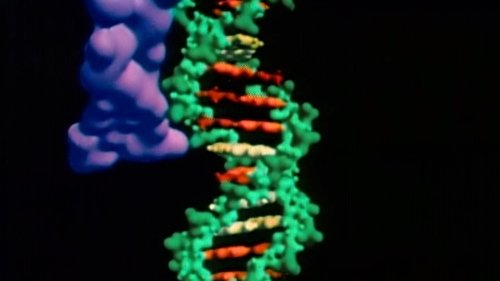
The brain is the focus of this fascinating portion of our journey as Dr. Sagan examines another of the intelligent creatures with whom we share the planet Earth — whales. Then we wind through the maze of the human brain to witness the architecture of thought. We see how genes, brains and books store the information necessary for human survival.
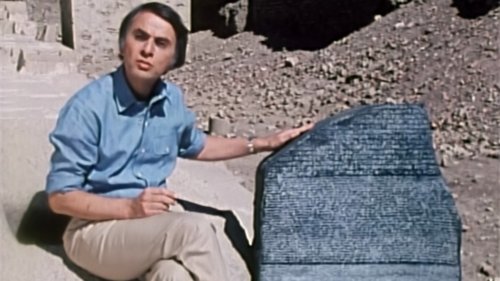
Are there alien intelligences? How could we communicate with them? What about UFOs? The answers to these questions take us to Egypt to decode ancient hieroglyphics, to the largest radio telescope on Earth and, in the Spaceship of the Imagination, to visit other civilizations in space. Dr. Sagan answers questions such as: "What is the life span of a planetary civilization?" and "Will we one day hook up with a network of civilizations in the Milky Way galaxy?"
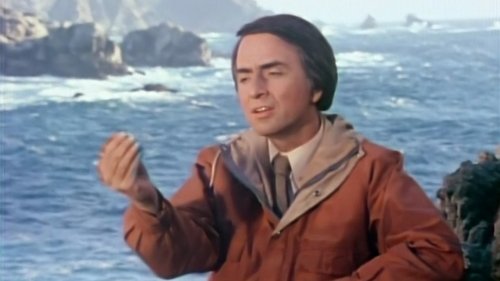
Through the use of special effects we retrace the 15-billion-year journey from the big bang to the present. We also hear the tragic story of the martyrdom of Hypatia, the woman scientist of ancient Alexandria. This is the famous episode on nuclear war in which Dr. Sagan argues that our responsibility for survival is owed not just to ourselves, but also to the cosmos, ancient and vast, from which we spring.
Principal cast and creators for Cosmos: A Personal Voyage. Click any person to explore full filmography.
Curated cinematic companions & narrative echoes of "Cosmos: A Personal Voyage"
From the planets to the stars and out to the edge of the unknown, history and science collide in a wondrous yet deadly adventure through space and time.
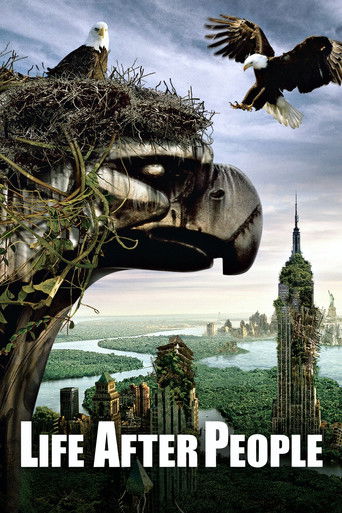
Life After People is a television series on which scientists, structural engineers, and other experts speculate about what might become of Earth should humanity instantly disappear. The featured experts also talk about the impact of human extinction on the environment, and the vestiges of civilization thus left behind.

Horizon tells amazing science stories, unravels mysteries and reveals worlds you've never seen before.
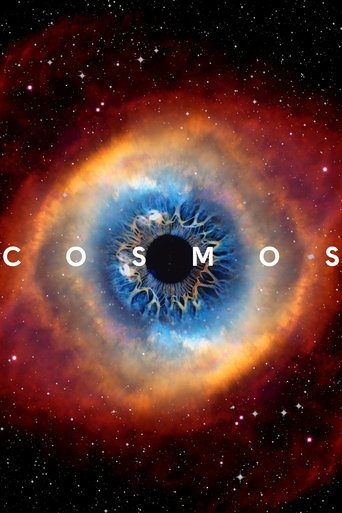
Famed astrophysicist Neil deGrasse Tyson provides clarity for the vision of the cosmos as he voyages across the universe with never-before-told stories that delve into the scientific concepts of the laws of gravity and the origins of space and time.
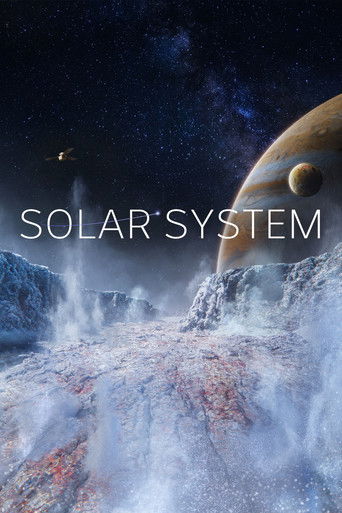
Voyage across the solar system with Professor Brian Cox and explore the new discoveries, natural wonders and strange mysteries on the diverse worlds that orbit the sun.
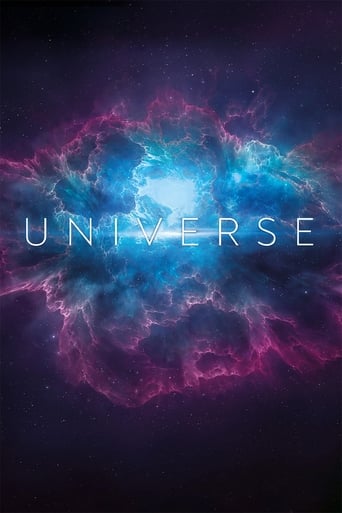
Professor Brian Cox journeys across the vastness of time and space revealing epic moments of sheer drama that changed the universe forever.
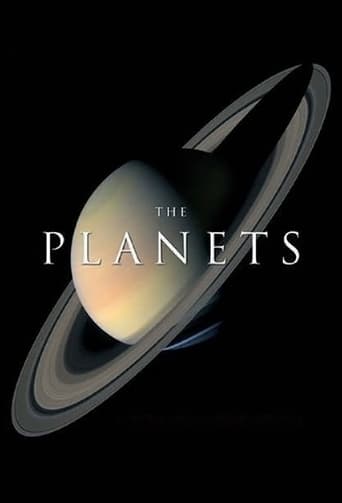
Documentary series tracing mankind's exploration of our solar system.
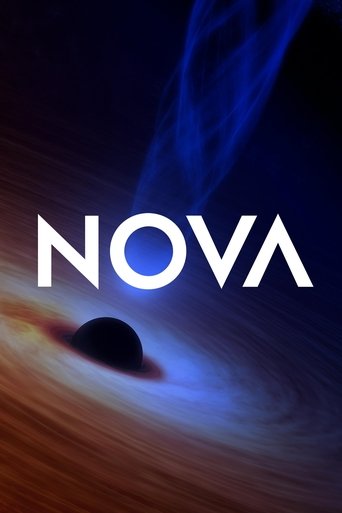
PBS' premier science series helps viewers of all ages explore the science behind the headlines. Along the way, NOVA demystifies science and technology, and highlights the people involved in scientific pursuits.
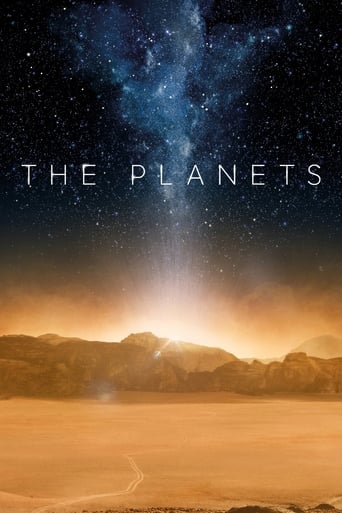
Professor Brian Cox explores the dramatic lives of the eight majestic planets/worlds that make up our solar system.
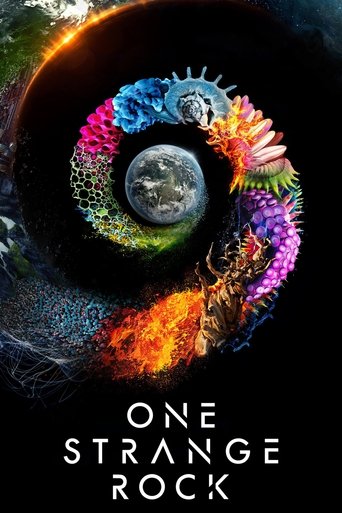
A mind-bending, thrilling journey exploring the fragility and wonder of planet Earth, one of the most peculiar, unique places in the entire universe, brought to life by the only people to have left it behind – the world’s most well known and leading astronauts.

TV's most-watched history series brings to life the compelling stories from our past that inform our understanding of the world today.
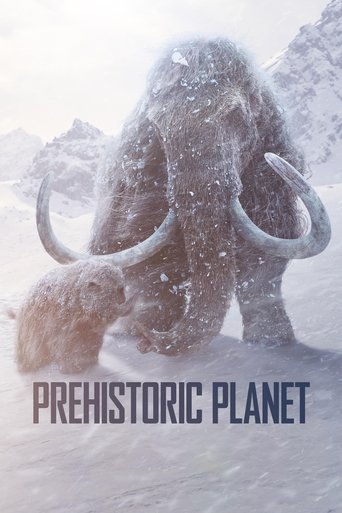
Experience the wonders of our world like never before in this epic series from Jon Favreau and the producers of Planet Earth. Travel back 66 million years to when majestic dinosaurs and extraordinary creatures roamed the lands, seas, and skies.

Through the prism of Jeff Goldblum's always inquisitive and highly entertaining mind, nothing is as it seems. Each episode is centered around something we all love — like sneakers or ice cream — as Jeff pulls the thread on these deceptively familiar objects and unravels a wonderful world of astonishing connections, fascinating science and history, amazing people, and a whole lot of surprising big ideas and insights.
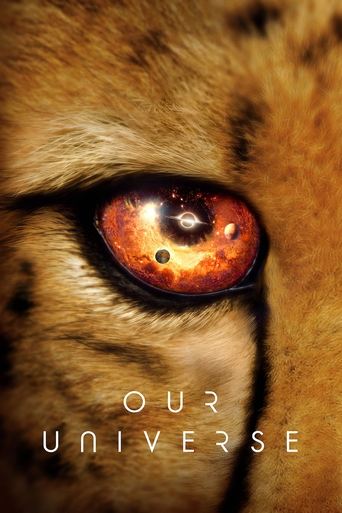
Witness the remarkable story of our universe over billions of years and its inextricable link to life on Earth in this sweeping documentary series.
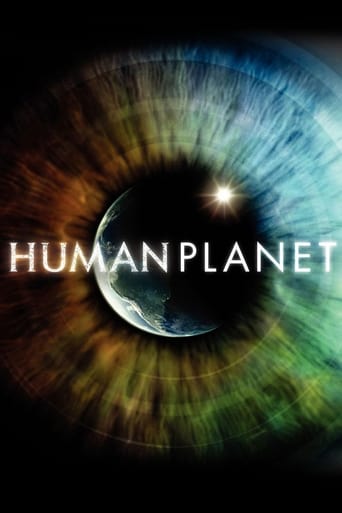
A cinematic experience bringing you the most amazing human stories in the world. Humans and wildlife surviving in the most extreme environments on Earth.

The history of the sport of baseball in America, told through archival photos, film footage, and the words of those who contributed to the game in each era. Writers, historians, players, baseball personnel, and fans review key events and the significance of the game in America's history.

Richard Feynman, theoretical physicist, enjoys thinking aloud about the adventures science can offer. Here he uses physics to explain how the everyday world works, such as why rubber bands are stretchy, why tennis balls can't bounce forever, and what you're really seeing when you look in the mirror.
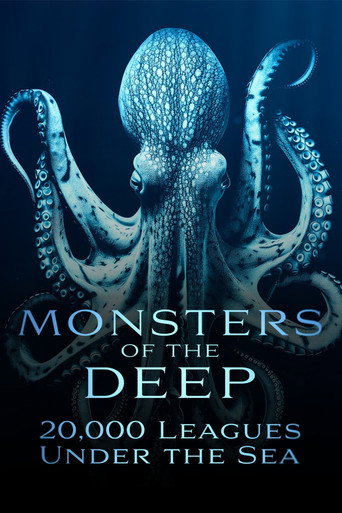
Exploring the world of deep-sea killers, revealing mysterious creatures with amazing CGI.

MythBusters is a science entertainment television program created and produced by Australia's Beyond Television Productions for the Discovery Channel. The show's hosts, special effects experts Adam Savage and Jamie Hyneman, use elements of the scientific method to test the validity of rumors, myths, movie scenes, adages, Internet videos, and news stories.

From the biology of attraction to the history of birth control, explore the ins and outs of sex in this entertaining and enlightening series.


Across five nights, Susan’s journey takes her to a different well-known resort every day as she enjoys all the fun of the seaside, with a few celebrity guests along to help her out.
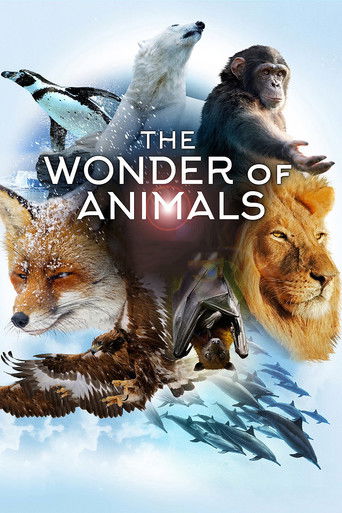
Chris Packham uses groundbreaking science and brand-new behaviour to delve deep beneath the skin and discover the unique features that have made certain animal groups successful.
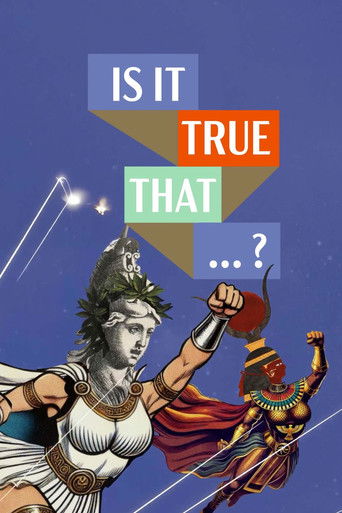
Did democracy actually originate in Greece? Was the plague the worst epidemic of all time? And did we really work harder in the past than we do today? Is it true that ...? questions what we think we know and takes another look at history.

Armed with a day pass and love of public transit, Jason explores a new city while riding as much public transit as possible.

A five-part series that features the latest research exploring how early humans evolved. See how the mixing of prehistoric human genes led the way for our species to survive and thrive around the globe. Archaeology, genetics and anthropology cast new light on 200,000 years of history, detailing how early humans became dominant.

A journey along Europe’s most spectacular night train routes, uncovering hidden natural stories along the way — stories of landscapes, wildlife, and the ecosystems that shape them.We meet people on board and along the routes. What unites them is a special connection to nature. Traveling through the night and into the early hours of morning, our routes take us across Germany, Scandinavia, Hungary, Austria, Switzerland, and almost the entire Balkan Peninsula, all the way to the outskirts of Istanbul.

Science, superstition, culture: This animated documentary series delves into various aspects of man's relationship with the Earth's satellite.
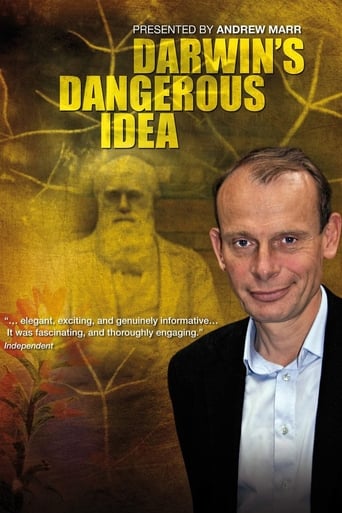
Andrew Marr explores how Darwin's theory of evolution by natural selection has taken on a life of its own far beyond the world of science.
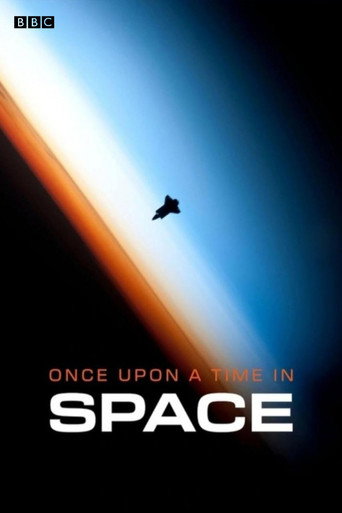
The human story of space exploration using unique, unexpected archive, present-day footage and first-hand testimony from around the world. This series will connect the past with the present and examine what the consequences are for the future of humankind as we once again head into space.

Unprecedented access to the renowned hospital's modern wards and private archive.
PRO subscribers unlock instant vector-based compatibility scoring, director motif analysis, and personalized mood matching for this title.
Taste vector analysis predicts high narrative synergy with your anchor directors and atmospheric preferences.
Add to your watched history with precise date
Predicting how well your taste aligns with others
Calculated using shared 5-star masterpiece overlap and rating resonance.
Rate more movies and shows to unlock shared recommendations.
Sign in with your username/email, or register instantly via email verification code.